String은 불변이다?
의문이 들었다. 아래와 같은 코드가 가능하기에
String str = "KJM";
str = "jammini";
이처럼 변수는 언제든 값을 바꿀 수 있는 가변
만약 변수에 값을 변경하지 못하게 하려면 final 키워드를 앞에 붙여줘야함.
final String str = "KJM";
str = "jammini";	// error!!
String이 불변이라는 소리는 무엇일까?
중요한 포인트 String은 기본 타입(Primitive Type)이 아닌 참조 타입(Reference Type)이라는 것. 즉, String은 클래스다.
Java에서 String 객체는 특별히 String constant pool에서 따로 관리가 된다.
int num = 10;
num = 20;

String str = "abc";
str = "def";
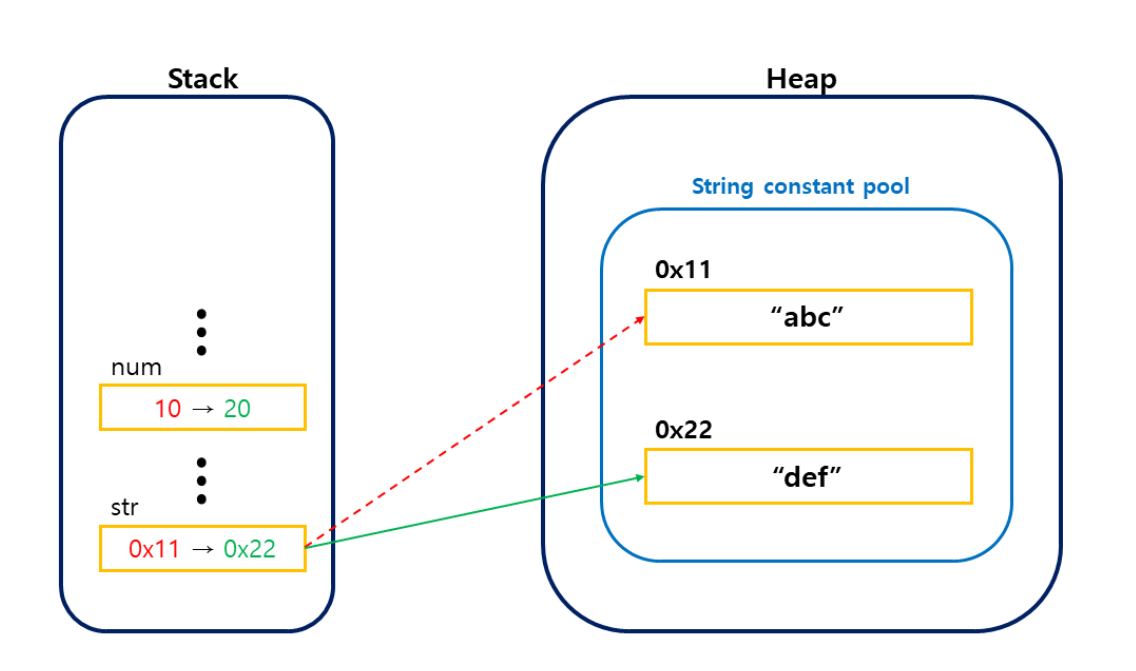
| 기본 타입(Primitive Type) | 참조 타입(Reference Type) |
|---|---|
| Stack 메모리에 값을 바로 저장 | Stack 메모리에 직접 저장되는 것이 아니라 Heap 영역에 저장 |
| 값을 변경 할 경우 변수가 갖고 있는 메모리에서 값 변경 | String은 Heap영역 중에서도 String constant pool이라는 곳에 메모리를 할당 받아 거기에 값을 저장 |
| 가변성 | 불변성 |
String Pool
String은 특별한 아이
String은 new 키워드와 생성자를 사용해 객체를 생성할 수 있음.
생성자 없이 큰 따옴표(“)를 통해서도 객체 생성할 수 있음.
String s1 = "Cat";
String s2 = "Dog";
String s3 = new String("Cat");
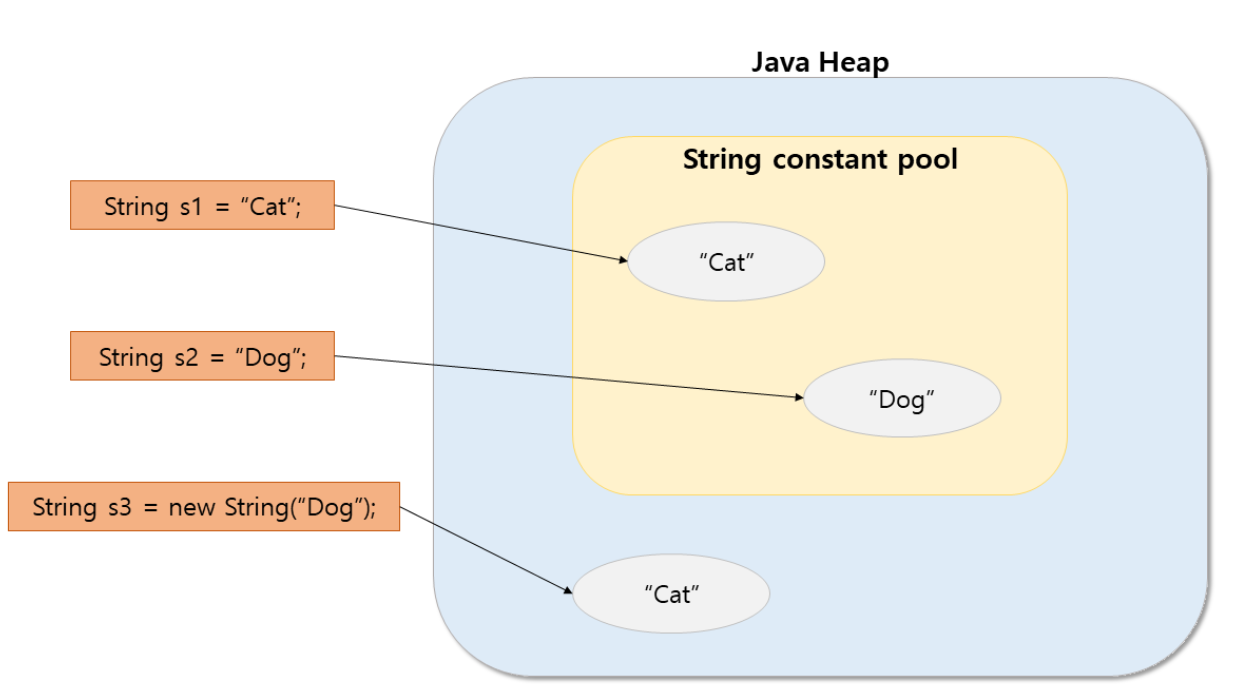
s1 과 s2는 String pool의 메모리를 가르키고 있음.
s3은 String pool이 아닌 일반 객체처럼 힙(Heap) 영역에 할당된 메모리를 가리킴.
String s1 = "Cat";
String s2 = "Cat";
String s3 = new String("Cat");
String s4 = new String("Cat");

System.out.println(s1 == s2);  // true
System.out.println(s1 == s3);  // false
System.out.println(s3 == s4);  // false
String Pool과 플라이웨이트(Flyweight) 패턴
String Pool은 플라이웨이트 디자인 패턴을 잘 적용한 대표적인 사례
Runtime에서 많은 양의 String 객체를 생성하게 되더라도 많은 양의 메모리공간을 절약
가비지 콜렉터(Garbage Collector)
1. 메모리 할당
2. 사용 중인 메모리 인식
3. 사용하지 않는 메모리인식
String s1 = "Cat";
s1 += "Dog";
“Cat” -> 가비지 콜렉터의 대상이 됨.
Example 1 :
Article article = null;
for(int i=0; i<100; i++) {
	article = new Article;
}
Example 2:
for(int i=0; i<100; i++) {
	Article article = new Article;
}
참조 사이트
https://www.baeldung.com/java-string-pool
https://readystory.tistory.com/140
https://stackoverflow.com/questions/8803674/declaring-variables-inside-or-outside-of-a-loop